
Chaos is the Only Stable State
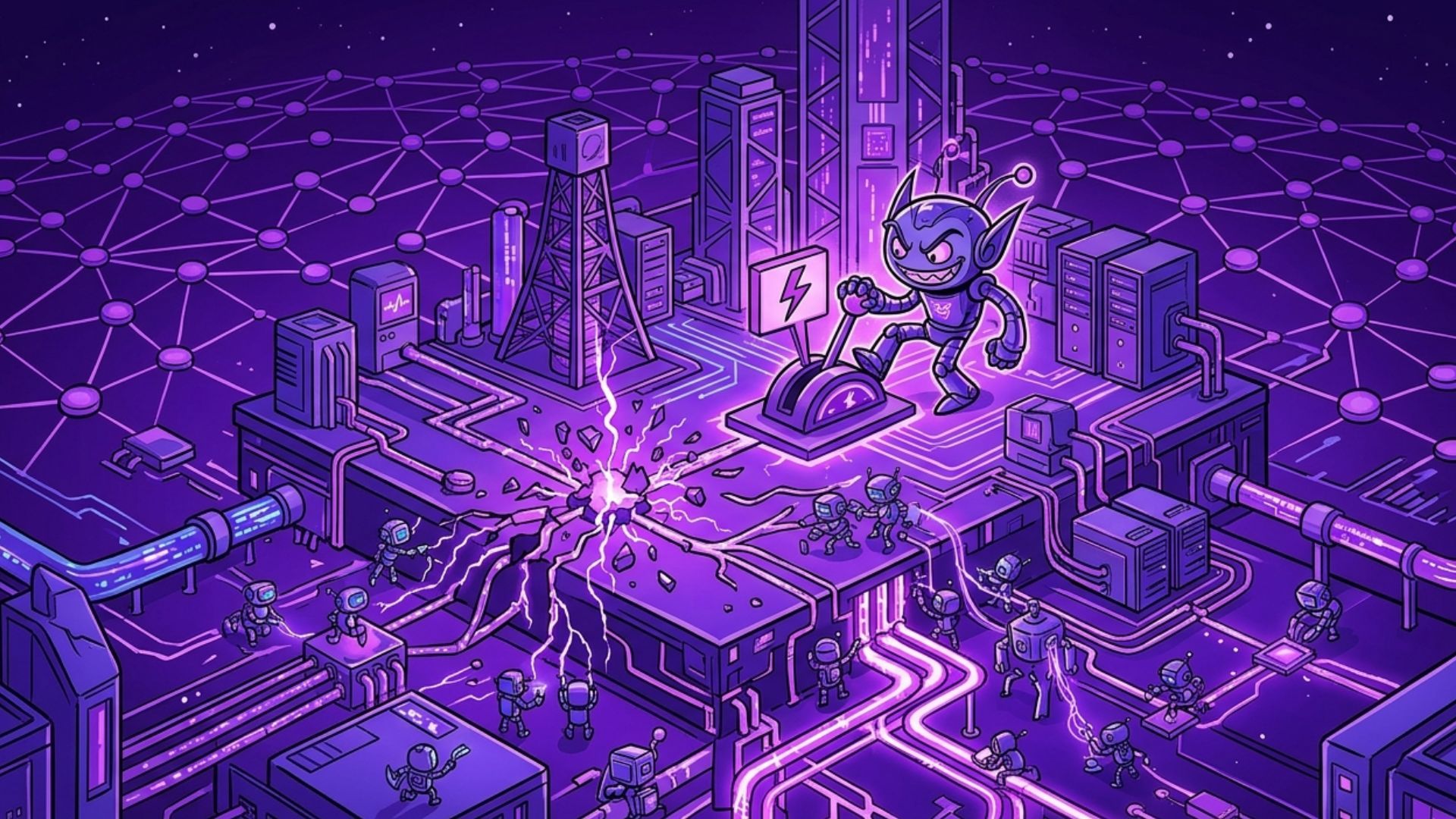
Every distributed system is a lie we tell ourselves. We architect load balancers, spin up redundant replicas, write runbooks for failure scenarios we have already imagined. Then production finds the failure scenario we did not.
Chaos engineering is the practice of deliberately injecting failure into a system to expose weaknesses before they surface on their own, at the worst possible time, in front of real users. It is not about breaking things for sport. It is about learning what is actually true about your system, as opposed to what your architecture diagrams suggest should be true.
We talk about systems reaching "steady state" the way we talk about weather settling. As if calm is the natural condition and turbulence is the exception.
It is not. Turbulence is the baseline. Dependencies degrade, traffic patterns shift, configurations drift, clocks skew, disks fill, certificates expire. The system you deployed last Tuesday is not the system running today. Entropy is not a threat model. It is the operating environment.
Chaos engineering accepts this as the starting premise. If disorder is constant, the only rational response is to make disorder legible.
Common Failure Modes Worth Testing
Most production incidents trace back to a surprisingly short list of failure categories:
- Network partitions. Services lose the ability to talk to each other. Does your system degrade gracefully, or does it cascade?
- Latency spikes. A downstream dependency slows to a crawl without going fully down. Timeouts and retry logic are rarely configured correctly until someone tests them under real conditions.
- Resource exhaustion. CPU saturation, memory pressure, connection pool limits. These tend to surface only at scale, which is exactly when you least want to discover them.
- Dependency failures. A third-party API goes down. A managed database hits a maintenance window. A DNS resolver becomes unreachable. Your system's behavior in these moments is often uncharted territory.
- Clock skew. Distributed systems make assumptions about time. Those assumptions break in interesting ways when nodes disagree about what time it is.
Starting Small
You do not need a Netflix-scale chaos platform to start. A few principles for beginning:
- Start in staging, not production. Build confidence in your methodology before widening the blast radius.
- Pick one thing. A single dependency, a single node, a single failure mode. Scope creep in chaos experiments produces noisy results that are hard to act on.
- Define your abort conditions before you start. If the error rate crosses X, you stop the experiment immediately. Write this down. Agree on it as a team before you run anything.
- Instrument everything first. Chaos engineering without observability is just an outage. If you cannot see what is happening in detail, you cannot learn from what you break.
Why "Stability" Keeps Coming Up Anyway
Stability, in a distributed system, is not a property you achieve. It is a property you continuously earn. The moment you stop testing your assumptions, the gap between your mental model and reality starts widening. That gap is where incidents live.
Chaos is not the enemy of stable systems. It is the mechanism by which stable systems stay honest.
The only stable state is the one you keep breaking on purpose.